Chernetskaya/Dreamstime.com
Heat styling tools create gorgeous hairstyles, but when misused, they can wreak havoc on your hair’s health. Professional stylists know that learning how to treat damaged hair starts with prevention, and the best salons strive to keep your strands healthy while delivering stunning results. When you know how to protect your hair from heat damage using professional methods, it transforms your hair care routine and helps you maintain beautiful, healthy tresses.
1. Pre-Treatment Conditioning
Beginning every heat styling session with a deep conditioning treatment creates a barrier around each strand, ensuring optimal protection. These treatments penetrate the hair shaft, filling in microscopic gaps and smoothing the cuticle before any heat touches your delicate locks.
Leave the treatment on for 10-15 minutes under gentle heat to allow the protective ingredients to bond with your hair’s natural proteins. This simple step makes heat styling safer and more effective.
2. Strategic Heat Temperature Control
Expert colorists and stylists never guess when it comes to selecting the right temperature settings. They carefully assess your hair type, thickness and any damage before choosing the optimal heat range for your specific needs. Typically, fine or chemically treated hair requires temperatures between 250°F and 300°F, while coarse, thick hair can safely handle temperatures up to 400°F.
Professional tools have precise temperature controls that consumer-grade tools often lack. Additionally, stylists adjust heat settings while styling, using lower temperatures for delicate areas, like the hairline, and higher settings for stubborn sections.
3. Professional Heat Protectant Application
Salon-quality heat protectants contain advanced silicones and polymers that create an invisible shield around each hair strand. These products require specific application methods to ensure every strand is protected. Stylists often use wide-tooth combs or brushes to evenly distribute the product and give it a few minutes to work its magic before styling.
4. Sectioning and Timing Techniques
Grandbrothers/Dreamstime.com
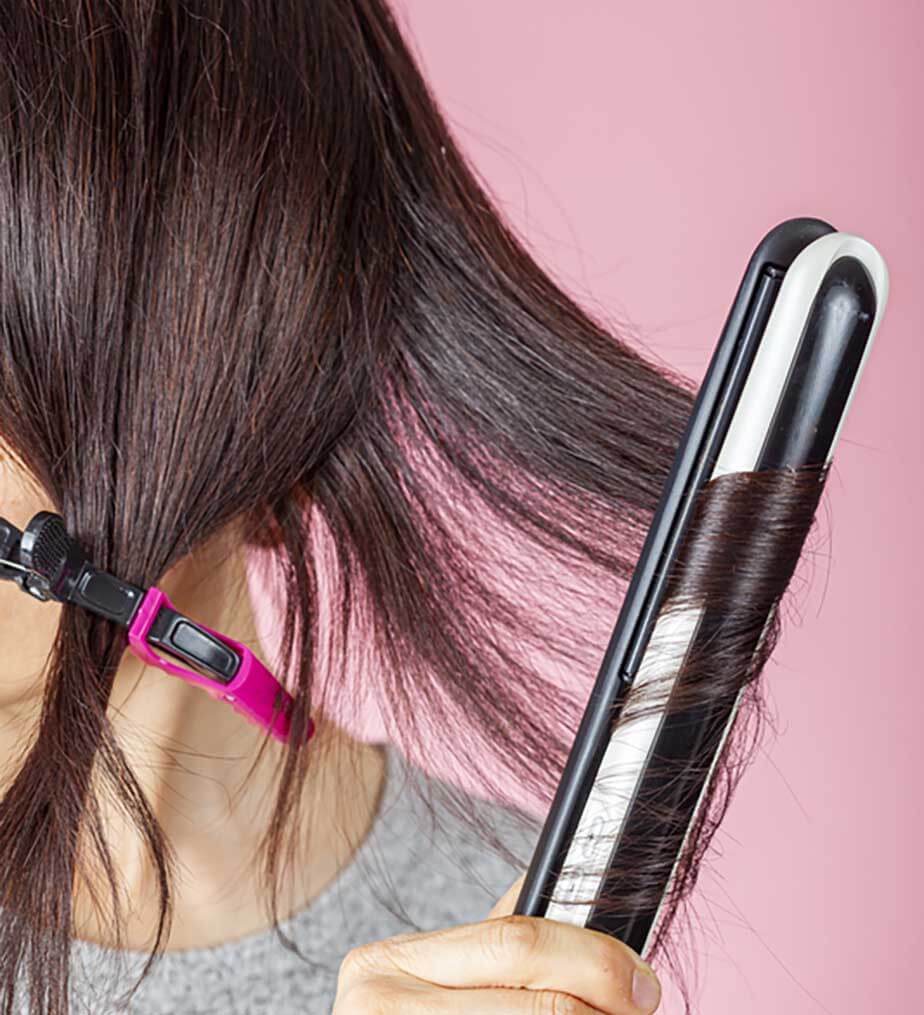
Mastering the art of sectioning hair into manageable portions makes heat styling more controlled and efficient. When you work with smaller sections, the heat penetrates evenly without requiring excessive temperature or multiple passes.
Timing plays an equally important role. Professional stylists work quickly and methodically, never keeping hot tools in contact with a client’s hair longer than necessary. Even at moderate temperatures, prolonged contact can cause significant damage, so professionals typically limit tool contact to five to eight seconds.
5. High-Quality Tools and Maintenance
Professional-grade tools feature advanced technology that distributes heat evenly and maintains consistent temperatures. Ceramic and tourmaline tools also generate negative ions to help seal the hair cuticle and prevent damage.
Stylists clean their tools after each use, calibrate temperature settings periodically and replace worn components right away to ensure optimal safety and performance. This attention to detail protects clients’ hair from damage while using heated tools to create crave-worthy styles.
6. The Power of Salon-Quality Conditioner
Salons use professional hair conditioners with protective capabilities that dramatically exceed those of retail products. These advanced formulas contain higher concentrations of proteins, ceramides and moisture-binding agents that strengthen hair from within and provide lasting protection.
7. Incorporating Hair Oiling Techniques
Modern salons have rediscovered ancient hair oiling practices and modified them to suit today’s heat styling needs. The many benefits of hair oiling include creating a heat barrier while nourishing the hair shaft. Professionals choose oils based on their heat tolerance, compatibility with styling products and individual client needs.
8. Proper Cool-Down and Finishing Protocols
The final phase of professional heat styling involves controlled cooling to set the style with minimal damage. Stylists use cool air settings and cooler tools to seal the hair cuticle in its new shape while preventing thermal shock.
Finishing products applied during the cool-down phase provide additional protection. They often contain UV filters and environmental protectants that shield hair from daily heat sources, such as sunlight and blow dryers.
Conclusion

Sofia Zhuravetc/Shutterstock.com
While heat is the key to creating beautiful styles, curling irons, straighteners and blow dryers all take a toll on your delicate locks. Before the next time you style your hair, take some inspiration from the pros to minimize damage. With the expert methods above, you can make heat styling a safe part of your beauty routine rather than a damaging necessity. And when you take steps to minimize damage, your hair will thank you!






Share Your Feedback